gas stove
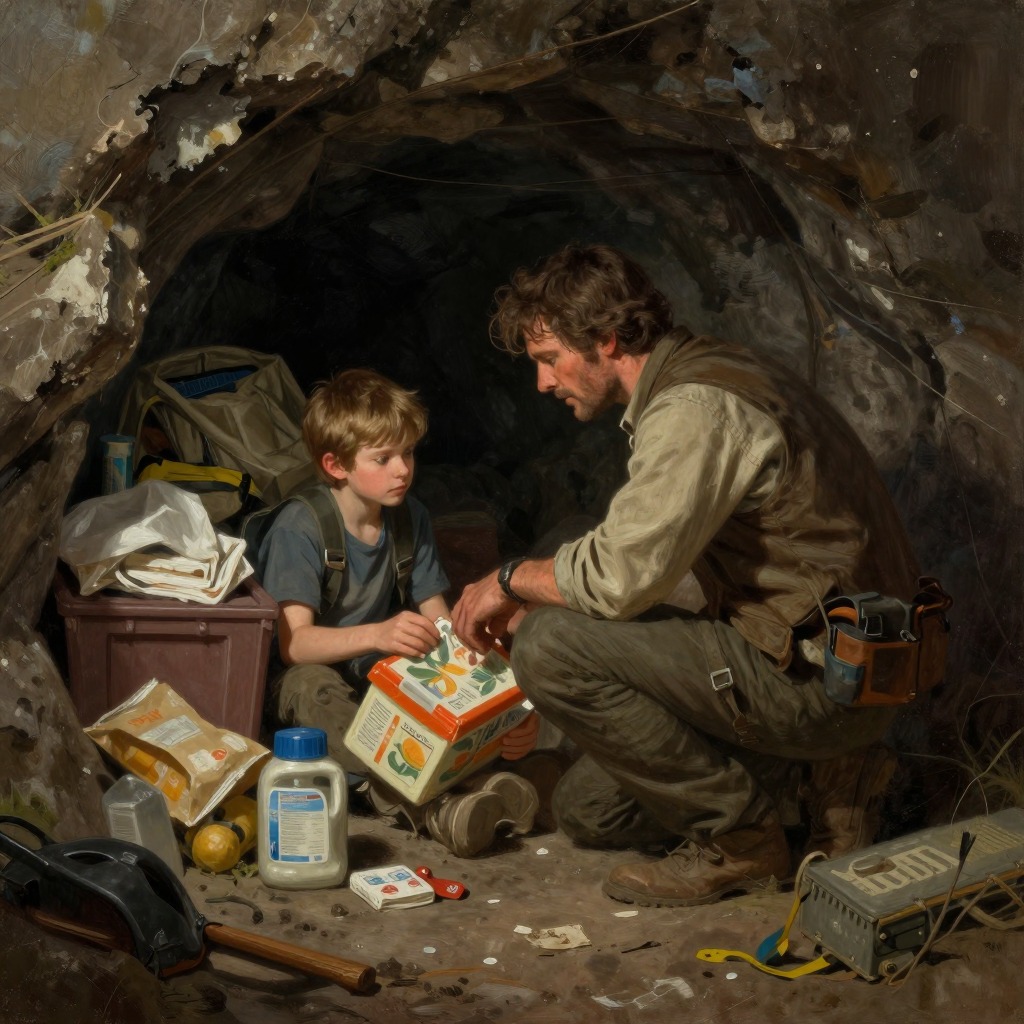
The gas stove is a small, portable two-burner appliance that the man and the boy salvage from the bunker and later from the wrecked sailboat, becoming a crucial tool for cooking hot meals and boiling water during their journey south. Its significance lies in how it transforms their survival from cold, raw subsistence to moments of warmth and nourishment, yet its fragility and eventual failure underscore the relentless scarcity and decay of their world.
Discovery and First Use in the Bunker
In the bunker, the man finds a small two-burner gas stove among the stores of canned goods, water jugs, and other supplies. He hooks it up to a gas tank, lights it, and uses it to cook a meal of ham, scrambled eggs, baked beans, and biscuits, grinding coffee by hand in a small grinder. The boy, waking to the smell of coffee and the sound of the grinder, is stunned by the abundance. The stove allows them to eat hot, cooked food for the first time in days, a luxury that feels almost unreal. The man uses the stove again to heat water for a bath, carrying it to the house and setting it up in the bathroom, where the blue flame of the burner provides the only light. Later, he dismantles the stove, removing the burner assembly and disconnecting the two burners with a small crescent wrench, then threads a bolt into the fitting of the junction and tightens it down, creating a single, lightweight burner that he can carry. He connects the hose from the tank and holds the small potmetal burner in his hand, a compact and portable heat source.
Use on the Road and at the Beach
After leaving the bunker, the man and the boy carry the modified burner and the gas tank with them. On the road, they use it to warm cans of food over the blue flame, eating cold lunches but heating their supper. At the beach, after salvaging supplies from the wrecked sailboat, the man uses the burner to heat water for tea, sitting wrapped in blankets against the wind. When the thief steals their cart and all their supplies, the man recovers the cart and later, in a store building at the end of a town, he digs out the burner and the tank of gas, lights the burner, and sets it in the concrete floor to provide light while he sutures his own leg wound. The burner's small flame becomes a source of both warmth and illumination in the cold, dark space.
Failure and Abandonment
The gas stove's reliability proves fragile. After the man and the boy leave the beach and head inland, the man lifts the tank from the cart and finds it feels light. He turns the valve, but the valve is already on; he turns the little knob on the burner, but nothing happens. The tank is empty. The man squats with his hands folded into a fist against his forehead, realizing the stove is useless. The boy admits he forgot to turn off the valve, but the man takes the blame, saying the threads were not sealed with teflon tape and it leaked. From that point on, they eat cold food, their meals reduced to cold cornbread, beans, and franks from a tin. The stove, once a source of comfort and warmth, becomes another piece of failed technology, a reminder of the constant erosion of their ability to sustain themselves. Later, on the beach after the boat salvage, they use the burner again to heat water for tea, but the episode of its failure lingers as a lesson in the precariousness of every resource.
Narrative and Thematic Significance
The gas stove embodies the tension between the remnants of the old world and the brutal reality of the new. It is a tool of domesticity and care, allowing the man to cook for the boy, to heat water for bathing, and to create moments of normalcy. Yet its dependence on finite fuel and its eventual failure mirror the larger collapse of infrastructure and the slow extinguishing of hope. The stove is not a symbol of salvation but of temporary reprieve, a fragile artifact that, like so much else, cannot be sustained. Its presence and absence mark the rhythm of their journey: moments of warmth and nourishment followed by cold hunger, the constant negotiation between the desire for comfort and the necessity of moving on.